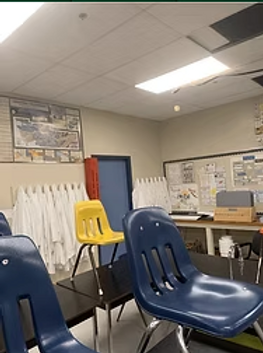
Chemistry
Chemistry
Chemistry
GRADE 8 – 9 COURSES
SC: SCIENCE 8 Prerequisite: Grade 7
Within the framework of the Communication, Thinking and Personal Social Core Competencies, Science 8 includes hands-on lab activities, inquiry projects, collaborative assignments and class work. This course also promotes positive attitudes toward science and an understanding of the importance of science in today’s complex world. The Big Ideas include the understanding that: Life processes are performed at the cellular level, the behaviour of matter can be explained by the kinetic molecular theory and Atomic Theory, the Theory of Plate Tectonics is the unifying theory that explains Earth’s geological processes and energy can be transferred as both a particle and a wave.

SC: SCIENCE 8/9 INCENTIVE
Required: Accepted into the Incentive Program.
This course is the first of a two-year accelerated Science curriculum where motivated and capable Incentive students cover three years of Science (8-10) in two years rather than the usual three. In this first course, Incentive Grade 8 students will cover the basic Science 8 curriculum and approximately half of the Science 9 curriculum The scientific method of inquiry will be a central theme through all of the major units covered, including Life Processes, The Kinetic Molecular Theory, Plate Tectonics, Light and the Electromagnetic Spectrum and Electricity. Learning will focus on the development of scientific skills and processes, critical thought and increased scientific knowledge. Class activities will include discussion and debate, as well as enrichment opportunities such as independent student research, culminating in a mandatory Science Fair project. Incentive students who successfully and satisfactorily complete this course may subsequently register for Science 9/10 Incentive.
SC: SCIENCE 9
Prerequisite: Science 8
Within the framework of the Communication, Thinking and Personal Social Core Competencies, Science 9 includes hands-on lab activities, inquiry projects, collaborative assignments and class work. This course also promotes positive attitudes toward science and an understanding of the importance of science in today’s complex world. During the year students will investigate Cell Division and the propagation of life, the Electron arrangement of atoms impacts their chemical nature and the Formation of Compounds, Electricity and electric current is the flow of electric charge and Interactions between the biosphere, geosphere, hydrosphere, and atmosphere are interconnected, as matter cycles and energy flows through them. This course involves laboratory experiments, demonstrations, and other activities.

SC: SCIENCE 9/10 INCENTIVE
Required: Accepted into the Incentive Program, as well as satisfactory completion of Science 8/9 Incentive.
This course is the second of a two-year accelerated Science curriculum where motivated and Incentive students cover three years of Science (8-10) in two years rather than the usual three. In this second course, Incentive Grade 9 students will cover the balance of the Science 9 course that started in Incentive Science 8, as well as the entire Science 10 curriculum. The scientific method of inquiry will continue to be a major theme through the study of topics such as: Genes as the foundation for the diversity of living things, energy is conserved and its transformation can affect living things and the environment, chemical processes require energy change as atoms are rearranged and the formation of the universe can be explained by the big bang theory. Laboratory activities will be used as a vehicle to develop the scientific approach to problem solving, as well as increased skills in scientific observation and interpretation. Class activities will include discussion and debate, as well as enrichment opportunities such as independent student research, culminating in a mandatory Science Fair project. Students will receive credit for Science 10 upon the successful completion of this course.
GRADE 10 - 12 COURSES
SC: SCIENCE 10
Prerequisite: Science 9
This course continues the development of scientific skills, knowledge and thinking abilities previously explored in Science 8 and 9. Laboratory activities emphasize the scientific approach to problem solving and the importance of scientific observations and interpretation. Big ideas specifically include: Genes as the foundation for the diversity of living things, energy is conserved and its transformation can affect living things and the environment, chemical processes require energy change as atoms are rearranged; and the formation of the universe can be explained by the big bang theory. The ultimate goal of the course is to help develop individuals who are aware, informed and concerned about the physical world.


SC: CHEMISTRY 11
Prerequisite: Science 10 and Math 10
Recommended: C+ or better in both Science 10 and Math 10
This is an introductory course, which emphasizes laboratory technical skills, observation of experimental phenomena, problem solving and analysis of data to verify scientific principles. Topics include: description of matter, classification of matter, periodic table, atomic theory, naming compounds, mole concept, stoichiometry, aqueous ionic reactions, and organic chemistry. Many options such as nuclear chemistry, gases, biochemistry, environmental and industrial chemistry will be offered. A scientific calculator will be necessary as this course involves mathematical problem-solving.
SC: CHEMISTRY 12
Prerequisite: Chemistry 11
Recommended: C+ or better in Chemistry 11 and Math 11
This course requires a solid foundation of the principles of Chemistry 11 to study at an advanced and demanding level the topics of: kinetics, chemical equilibrium, solubility, acids and bases, and electrochemistry. Substantial laboratory work will be required and involve quantitative and qualitative analysis. Emphasis will be placed on problem solving, conceptual understanding and critical thinking.

CHEMISTRY PICTURES


CHEMISTRY INTERVIEW(S)